

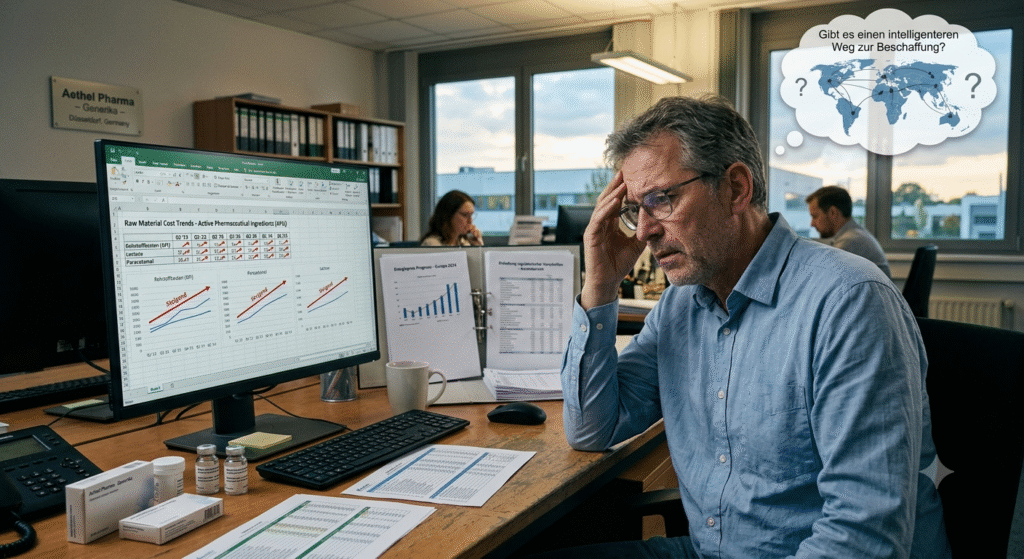
A mid size German generics buyer is staring at a spreadsheet, watching their raw material costs creep up quarter after quarter. Energy prices in Europe have not fully calmed down. Regulatory compliance costs keep climbing. And somewhere in the back of their mind, they are wondering, is there a smarter way to source this?
If you are an Indian pharma exporter, BD head, or founder reading this, that buyer’s headache is actually your opportunity. But only if you understand what’s really driving it.
The real story behind the cost pressure
European procurement teams aren’t cutting costs because they want cheaper suppliers for the sake of it. They are doing it because their entire cost structure has shifted. A few things are happening at once:
First, energy intensive manufacturing in Europe has become genuinely expensive to sustain, pushing buyers to look at total landed cost rather than just unit price. Second, EU sustainability and ESG reporting requirements (think CSRD and the broader Green Deal push) are adding compliance overhead that buyers now factor into every sourcing decision. Third, supply chain resilience, a lesson Europe learned hard during recent years, means buyers are actively diversifying away from single source dependencies, often China heavy ones, toward partners who can demonstrate stability.
Here is the part most Indian suppliers miss: European buyers aren’t just asking “what’s your price?” anymore. They are asking “what’s your total cost of doing business with me, including risk?” That’s a completely different conversation, and it’s one where India can genuinely win, if you know how to have it.
What this actually means for you
Think of it like buying a car. The sticker price matters, but so does fuel efficiency, maintenance costs, and resale value. European procurement teams have started thinking the same way about suppliers. A slightly higher unit price from a reliable, compliant, ESG conscious Indian manufacturer can beat a cheaper but riskier alternative because the buyer’s real cost includes the price of things going wrong.
This is why Indian pharma companies that invest in transparent ESG reporting, robust quality documentation, and long term contract structures (rather than one off transactional deals) are seeing stronger, stickier relationships with European buyers. It’s not about being the cheapest. It’s about being the least risky and most predictable partner in the room.
Three things you can act on this week
- Reframe your pitch around total cost, not unit price. If your sales conversations are still leading with “we are cheaper,” you are fighting the wrong battle. Lead with reliability, compliance readiness, and supply continuity instead.
- Get your ESG story in order. You don’t need a 40 page sustainability report. You need clear, honest answers about energy use, waste management, and labor practices because European procurement teams are now required to ask, and they will.
- Offer flexibility in contract structures. Buyers under cost pressure often want longer term price stability, not just a good quote today. If you can offer multi year pricing frameworks or volume based tiering, you become a partner, not a vendor.
The bigger picture
European buyers aren’t retreating from global sourcing, they are getting smarter about it. And “smarter” almost always means fewer, more trusted partners rather than the cheapest bidder in every tender. That is a shift in favor of companies who show up prepared, not just companies who show up cheap.
So here is the question worth sitting with: when a European buyer looks at your company, are they seeing a lower cost supplier, or a lower risk partner? Because right now, only one of those wins the long term contract.
phaglo.com — Global Life Sciences Advisory, Your Strategic India Partner for Global Life Sciences Growth
#PharmaExports #IndiaPharma #GlobalSourcing #PharmaProcurement #LifeSciencesGrowth